
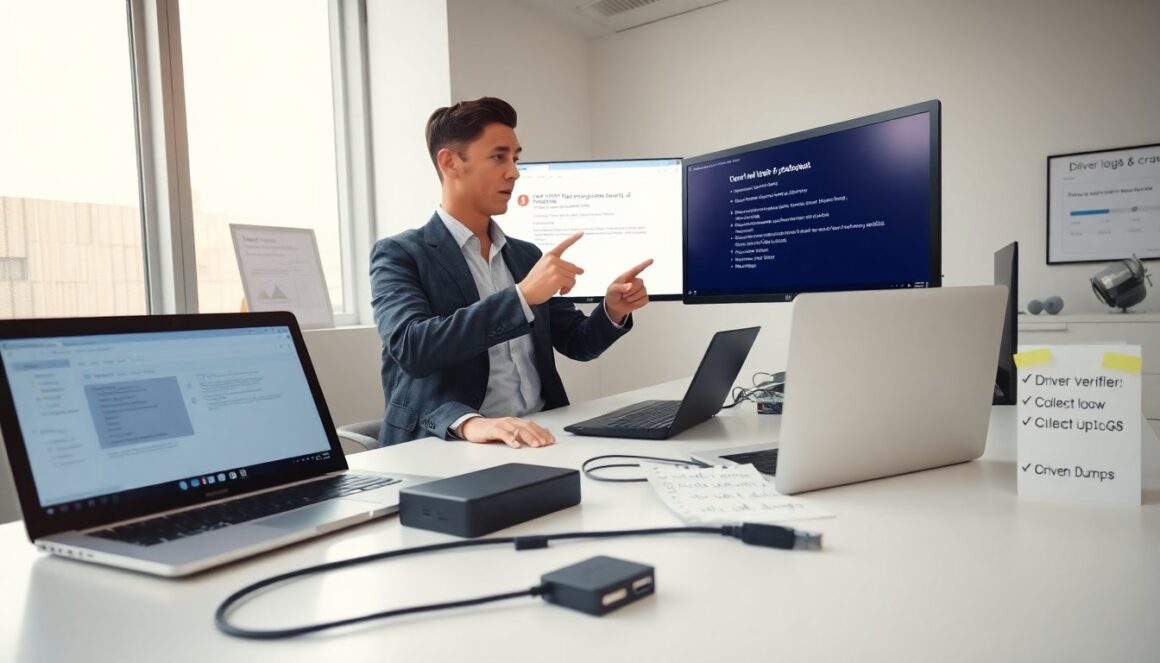
The guide explains how to fix code error 10 uptempo mag state decay 2 pc. It shows quick checks, safe fixes, and deeper diagnostics. The reader learns steps they can run now. The instructions use clear actions and simple tools. The tone stays practical and direct. The reader can follow steps for most Windows PCs and many common hardware setups.
Key Takeaways
- Code error 10 uptempo mag state decay 2 pc indicates a device driver or hardware timing issue causing device failure or reduced function.
- Start troubleshooting by rebooting, reconnecting devices, updating drivers and firmware, and testing different ports or cables to fix the error quickly and safely.
- Use Windows Safe Mode and the built-in Hardware and Devices troubleshooter to identify if third-party software causes the code error 10 uptempo mag state decay 2 pc.
- Advanced diagnostics include checking Event Viewer logs, running Driver Verifier, collecting crash dumps, and testing hardware on another PC to pinpoint the cause.
- Prevent future occurrences by regularly updating drivers and firmware, using quality cables, configuring power settings to disable USB selective suspend, and isolating critical devices.
- Maintain detailed logs of driver, firmware versions, and troubleshooting steps to speed repairs and facilitate support if code error 10 uptempo mag state decay 2 pc persists.
What This Error Message Means And Common Causes
The message “code error 10 uptempo mag state decay 2 pc” reports a device failure or driver mismatch. It points to a timing or state update that a device driver failed to handle. The PC will usually show reduced function or crashes in the related app. The common causes include outdated drivers, corrupted firmware, conflicting software, and failing hardware.
Drivers often cause the error. A driver may send an invalid state or drop a timing packet. The system then logs code error 10 uptempo mag state decay 2 pc. Firmware problems can cause similar logs. A device firmware may reject state updates or decay timers. Software conflicts can also trigger the error. Two programs may access the same device and send contradictory commands.
Hardware faults remain possible. A failing USB port, cable, or peripheral can drop packets. The PC may register those drops as timing decay and write code error 10 uptempo mag state decay 2 pc to the log. Power issues can amplify the problem. The device may not receive stable voltage and then fail state checks.
The report rarely indicates a single root cause. The message points to timing and state handling. The technician should check drivers, firmware, and hardware in that order. The next section lists quick, safe fixes to apply first.
Quick, Safe Fixes To Try First On Your PC
They should start with simple checks. They should revert to quick fixes before deep diagnostics. Step 1: reboot the PC. A reboot clears transient errors and resets device states. Step 2: disconnect and reconnect the device. The user should unplug the peripheral, wait five seconds, and plug it back in.
Step 3: update drivers. They should open Device Manager, find the device, and select Update driver. If Windows finds no update, they should download the latest driver from the device maker. Step 4: install firmware updates. The user should visit the device support page and follow the firmware instructions. They should apply firmware only from official sources.
Step 5: try a different port or cable. The user should swap USB ports or change the cable and then re-test. Step 6: boot in safe mode. Safe mode disables third-party drivers and services. If the error disappears in safe mode, a third-party driver or app likely caused code error 10 uptempo mag state decay 2 pc.
Step 7: run the built-in troubleshooter. Windows includes Hardware and Devices troubleshooter. The troubleshooter can detect common driver issues and repair them. Step 8: check power settings. The user should set USB selective suspend to Disabled in Power Options. That change prevents the system from suspending device power and creating timing decay events. If these fixes fail, the reader should continue to advanced diagnostics.
Advanced Diagnostics: Logs, Modes, And Hardware Checks
They should gather logs next. They should reproduce the error and then open Event Viewer. They should filter logs in Windows Logs > System for code error 10 uptempo mag state decay 2 pc entries. They should note the time, source, and event ID. Those details guide the next step.
They should enable driver verifier for the suspect driver. Driver Verifier stresses drivers and can expose timing failures. The user should run verifier from an admin command prompt and select the suspect driver only. They should reboot and reproduce the error. If Windows flags a verifier violation, the user should record the crash dump.
They should collect crash dumps with WinDbg or other tools. They should analyze the dump to find the module that triggered the timing error. The analysis can show whether the failure came from a driver, firmware, or kernel module. If the dump points to user-mode software, the user should update or remove that app.
They should test hardware components. The user should try the device on a second PC. If the device fails on two PCs, the device likely fails. The user should also test known-good cables and ports. They should use a powered hub if power appears weak. For complex devices, the user should reflash firmware to a stable older version if the latest update created the error.
They should keep a clear log of steps and findings. The log helps support staff if the user opens a support ticket. The log should list driver versions, firmware revisions, and test results. This evidence speeds repair and reduces repeated steps.
Preventive Steps And Best Practices To Avoid Reoccurrence
They should keep drivers and firmware current. The user should set a calendar reminder to check updates every two months. They should rely on the device maker for official releases. They should avoid beta drivers on production systems.
They should use quality cables and ports. Cheap cables cause voltage drop and packet loss. The user should prefer shielded cables and tested power supplies. They should avoid USB hubs that do not supply power.
They should configure Windows power settings for stability. The user should disable USB selective suspend and set the power plan to Balanced or High Performance. They should test sleep and hibernate behavior after changes.
They should isolate critical devices. The user should avoid running multiple device management apps that access the same hardware. They should run one control app at a time. They should keep a spare known-good device for quick swap testing.
They should document system changes. The user should record driver and firmware updates, app installs, and hardware swaps. The record helps link a new change to the return of code error 10 uptempo mag state decay 2 pc. They should contact official support when the logs show repeated failures.