
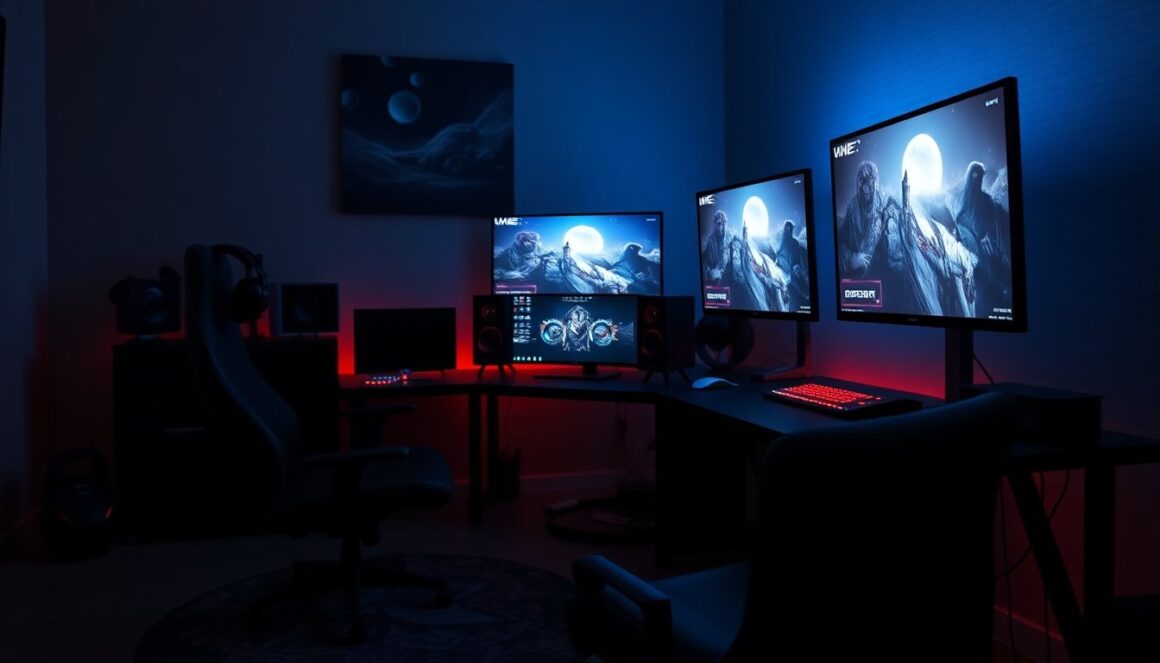
Creating the ultimate gaming setup uptempomag presents a clear plan. The guide sets goals, budgets, and space needs. The writer lists priorities and trade-offs. The reader learns how to match hardware, ergonomics, and style. The piece aims to help anyone design a setup that performs, feels good, and looks right.
Key Takeaways
- Creating the ultimate gaming setup starts by defining your gaming goals, budget, and space to ensure efficient planning and prioritized purchases.
- Choose PC or console setups based on your preferred playstyle, balancing hardware components like CPU, GPU, and storage for optimal performance.
- Prioritize monitor refresh rates and resolution according to competitive or immersive gaming needs, and select audio and peripherals that enhance comfort and responsiveness.
- Incorporate personalization and streaming gear thoughtfully, while futureproofing your setup with upgrade plans, surge protection, and spare accessories.
- Ergonomics and proper lighting are essential for comfort and health; adjust chair, monitor, and desk positions and use soft lighting to reduce fatigue.
- Maintain a clean and efficient gaming area through smart cable management, acoustic treatments, and mood lighting to enhance both gameplay and streaming experiences.
Define Your Goals: Gaming Needs, Budget, And Space Planning
The player defines goals before buying. The player states primary games and session length. The player sets a firm budget and a flexible buffer. The player measures available room and desk footprint. The player evaluates noise limits and shared spaces. The player prioritizes frame rate for competitive play and resolution for single-player titles. The player chooses portability if they move often. The player compares cost per performance to avoid overspending. The player records must-have items and nice-to-have items. The player plans for future upgrades by leaving room in the budget.
Choose The Right PC Or Console Setup For Your Playstyle
The gamer selects PC when they want higher frame rates and mod support. The gamer selects console when they want simplicity and exclusive titles. The gamer balances CPU and GPU choices around game type. The gamer favors GPU power for shooters and GPU/CPU balance for simulation titles. The gamer picks SSD storage for fast load times. The gamer adds RAM when multitasking and streaming. The gamer checks input latency specs for controllers and mice. The gamer chooses a hybrid setup if they want both PC and console play. The gamer compares repair and upgrade costs before deciding. The gamer factors in monitor refresh rate and resolution when they pick hardware.
Monitor, Audio, And Peripherals: Prioritizing Performance Where It Counts
The player selects a monitor that matches their GPU output and playstyle. The player chooses high refresh rates for competitive play and higher resolution for immersive play. The player picks adaptive sync when tearing matters. The player values low response time for fast input. The player picks headphones for accurate soundstage in competitive games. The player uses speakers for social play and streaming. The player chooses mechanical keyboards for tactile feedback and membrane for quiet. The player selects mice with reliable sensors and comfortable grips. The player buys controllers with low latency for couch play. The player tests devices before final purchase when possible.
Finishing Touches: Personalization, Streaming Gear, And Futureproofing
The gamer adds personalization to make the space unique. The gamer mounts art, figures, and posters to add character. The gamer uses themed color palettes for a consistent look. The gamer adds a microphone and capture card for higher quality streaming. The gamer uses a dedicated webcam for face cam and proper framing. The gamer chooses streaming software based on feature needs and ease of use. The gamer keeps spare cables and adapters for quick swaps. The gamer buys surge protection and a quality UPS for power events. The gamer plans upgrade cycles around component lifespans and market trends. The gamer saves a small upgrade fund to handle sudden needs.
Ergonomics And Lighting: Comfort, Health, And Ambience
The user sets chair height so feet rest flat on the floor. The user sets monitor height so the top of the screen sits at eye level. The user keeps shoulder relaxed and elbows near a 90-degree angle. The user places keyboard and mouse within easy reach to reduce strain. The user uses soft task lighting to reduce eye fatigue. The user picks neutral white light for clarity and warm light for relaxed sessions. The user avoids glare by angling monitors and closing blinds when needed. The user uses a light schedule to reduce blue light before bedtime. The user takes short breaks every hour to stretch and rest eyes.
Desk, Chair, And Posture Optimization
The player chooses a desk with enough depth for monitor distance and mouse travel. The player selects a chair with lumbar support and adjustable armrests. The player sets chair tilt to encourage an open hip angle. The player uses a footrest if feet do not reach the floor. The player positions keyboard and mouse to keep wrists straight. The player chooses a monitor arm to free desk space and fine-tune height. The player prefers rounded desk edges to reduce wrist pressure. The player replaces flimsy chairs and desks to avoid pain during long sessions.
Smart Lighting, Cable Management, And Acoustic Tips
The builder routes cables along desk legs and behind shelves to hide clutter. The builder bundles cables with ties and labels them for quick swaps. The builder uses sticky channels and under-desk trays for power strips. The builder places acoustic panels at first reflection points to reduce echo. The builder adds a rug to dampen floor reflections in hard-floor rooms. The builder uses noise gates and software filters to remove background noise during streams. The builder positions speakers symmetrically to maintain stereo balance. The builder avoids hard surfaces opposite the listener to reduce slap echo. The builder uses color-changing LED strips to match game scenes and mood.