
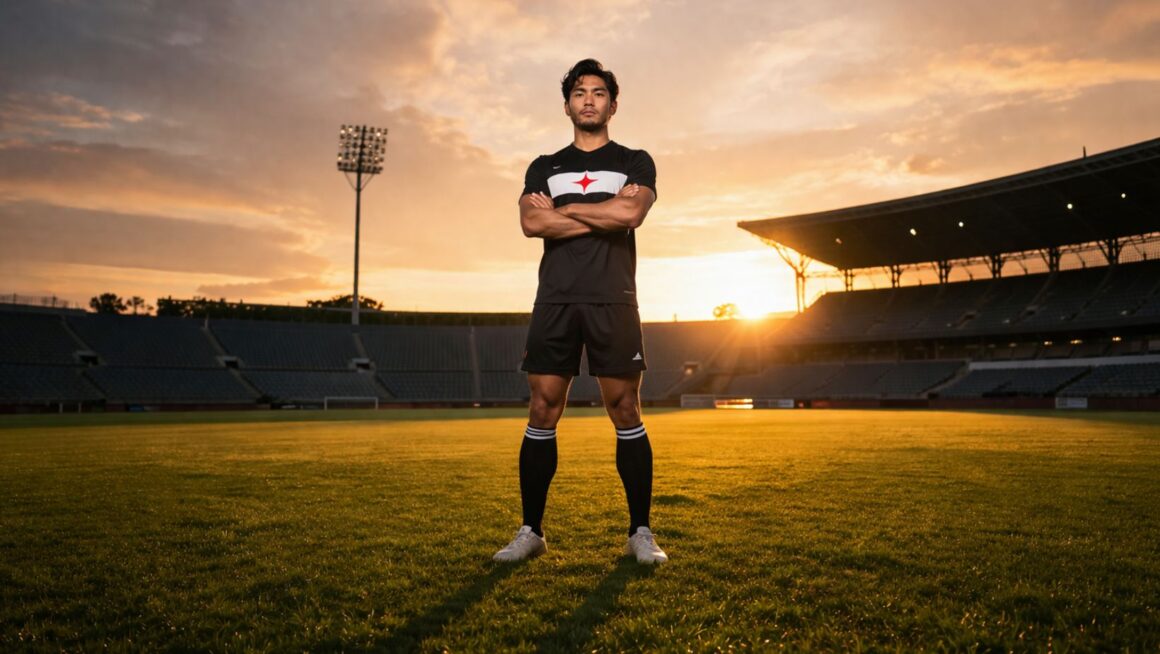
Ask most football coaches what separates a good team from a great one and they will talk about talent, conditioning, and game strategy. Those things matter. But there is a layer that gets overlooked almost every time, one that sits quietly underneath all the visible performance variables and affects everything above it. It is what the team wears.
This article breaks down what sports science has discovered about football uniforms, why the psychology behind a jersey is more serious than most people give it credit for, and what it means practically for football teams at every level trying to build something real.
Every Winning Football Team Has Something in Common Beyond Talent
Watch any elite football team closely enough and a pattern starts to emerge that goes beyond just talent, conditioning, and game strategy.
The Seahawks walked into a stadium in their uniforms. The Cowboys in their iconic silver and blue taking the field for a primetime game. The 49ers pulled on their throwback red before a playoff run. These are not just aesthetic moments. They are rituals of identity, and sports science has been paying close attention.
What researchers and coaches at the highest levels of football have known for years is now filtering down to youth leagues, high school programs, college clubs, and adult recreational teams everywhere. The uniform is not just clothing. It is a psychological trigger, a branding tool, a cohesion mechanism, and in some measurable ways, a performance driver.
If you run a football team, coach a squad, or manage an athletic organization at any level, understanding this changes how you think about custom football uniforms entirely.
What Sports Science Actually Says About Football Uniforms
A study out of California State University found that athletes who felt their uniforms were high quality and well-fitting reported significantly higher confidence levels before competition than athletes who felt indifferent about their gear.
As Psychology Today reports, what a team wears has a measurable impact on how they perform and how they are perceived on the field. Confidence before competition is one of the strongest predictors of athletic performance. It is not the only factor, but it is a real one.
A separate body of research looked at what happens to group cohesion when teams wear matching uniforms versus mixed or casual gear during training. The results were consistent.
Teams in matched uniforms developed stronger collective identity faster, communicated more efficiently on the field, and reported higher trust in teammates over the course of a season.
None of this is surprising when you think about the mechanism behind it.
A uniform signal belonging. Belonging activates commitment. Commitment drives effort. Effort drives results. The chain is simple, but the starting point of that chain is what your football team puts on before kickoff.
The NFL Figured This Out a Long Time Ago Modern NFL franchises spend considerable resources on uniform design and team apparel precisely because they understand this psychology.
The Seattle Seahawks’ 2012 uniform redesign was not a coincidence. It coincided with the construction of one of the most dominant defensive units in recent NFL history and a culture that became famous for its ferocity and identity.
The Dallas Cowboys have maintained their aesthetic largely unchanged for decades, and that consistency has become part of a brand identity worth billions. The San Francisco 49ers returned to throwback elements during their recent resurgence, and players openly talked about what putting on that jersey meant to them.
This is branding at the intersection of performance culture. And it works the same way at every level of football, not just the NFL.
What This Means for Football Teams That Are Not Playing on Sunday
Here is where it gets practical for the other 99% of football players.
Youth leagues, high school programs, college club teams, adult flag leagues, and competitive travel teams all operate with the same human psychology at play. A fourteen-year-old who pulls on a custom football jersey with their name on the back before a tournament is experiencing the same psychological activation as a professional.
The scale is different. The mechanism is identical. What has changed in recent years is that the barrier to accessing professional-quality custom football uniforms has dropped dramatically. Sublimation printing technology, which is what the major programs use to achieve those clean, vibrant, and durable designs, is now accessible at price points that make sense for community-level sports budgets.
This is where football teams that are serious about building culture make a move that teams still in mismatched kits are not making.
One company that football teams across the country have been relying on for exactly this is HAMCO Sports. With over 15 years of experience producing custom football uniforms, they bring genuine expertise to the table rather than just moving bulk orders through a generic pipeline.
No minimum order requirements means a small squad can gear up without overpaying. Free design mockups mean you see exactly what you are getting before you commit. And their turnaround fits real football schedules rather than forcing teams to plan months in advance.
The Technology Behind Today’s Custom Football Uniforms
This is the part that often surprises coaches and team managers who have not ordered custom football uniforms recently.
Modern sublimation printing is not the same process that gave older custom jerseys their faded numbers and cracking lettering by mid-season. The technology has advanced significantly.
Full sublimation means the design, the colors, the numbers, the names, and the sponsor logos are infused directly into the fabric at a molecular level during the production process. There is no layer sitting on top of the material that can peel, crack, or wash out.
The design is part of the fabric itself. A well-made sublimated football uniform worn through a full season of play and regular washing comes out looking the same as it did on opening day.
The performance fabrics have advanced equally.
Moisture-wicking materials that pull sweat away from the skin and accelerate evaporation genuinely affect comfort levels during extended physical effort. In football where games run long and physical demands are intense, that comfort translates to maintained focus in the later stages of competition.
What to Prioritize When Ordering Custom Football Uniforms
For football teams ready to make this investment, a few decisions made upfront save time and money down the line.
Get the fabric specification right before worrying about the design: The visual details matter, but a jersey that performs poorly in the conditions your team actually plays in will undermine everything else. Talk to your provider about field conditions, climate, and the physical intensity of your league.
Design with photography and video in mind: Your team’s football uniform lives its most public life in photos and highlights shared across social media. A design with clean lines, strong color contrast, and a logo that reads clearly at thumbnail size will do more for your team’s visibility than a cluttered design that looks busy on a screen.
Build sponsor placement into the design from day one: Chest panels, sleeve bands, and back placement are standard positions. Planning for these from the beginning looks intentional. Adding them as afterthoughts never does.
Order with a slight buffer: Rosters shift. Players get added mid-season. A small buffer order at the outset is always cleaner than trying to source a matching jersey several weeks into the season.
Start earlier than you think you need to: Even with a three to four week turnaround, design approvals and sizing confirmations take time. Start the process at least six weeks before opening kickoff.
The Football Teams Taking This Seriously Are Getting Ahead
The data on team culture, performance, and identity converge on one clear point. Football teams that invest in the foundational elements of how they present and carry themselves consistently outperform teams of similar talent that neglect those elements.
A custom football uniform is one of the most direct, visible, and immediate investments a team can make in its own culture. It changes what the team believes about itself the moment it goes on. And in football, belief is not a soft factor. It is one of the hardest edges you can build.
The NFL works at one level of investment. Youth leagues, travel teams, and adult clubs work at another. The psychology is the same across all of them. The football teams that understand that are the ones that show up differently.
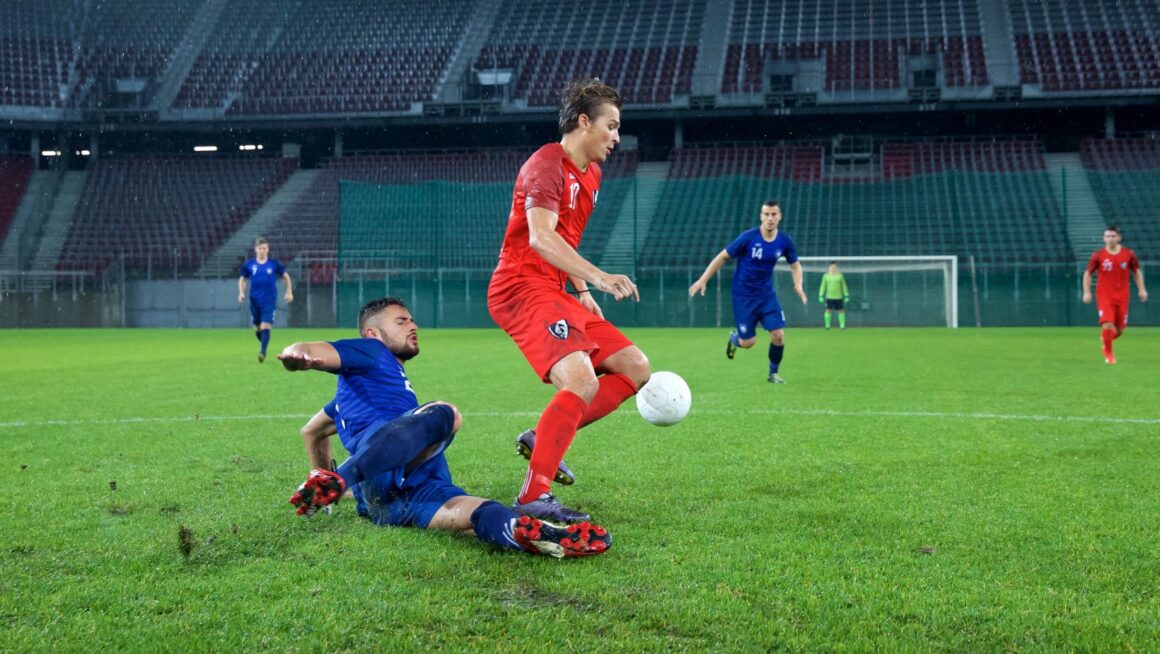
If your team is ready to invest in professional custom football uniforms built for real performance and lasting durability, explore the full range of options at HAMCO Sports, where 15 years of experience, zero minimums, and free design support come standard.
Frequently Asked Questions About Custom Football Uniforms
How long does it take to get custom football uniforms?
With a quality provider like HAMCO Sports, turnaround is typically three to four weeks. Factor in design approval time and aim to start the process at least six weeks before your first game.
Is there a minimum order for custom football uniforms?
Not with every provider. HAMCO Sports has no minimum order requirement, which makes them a practical option for smaller teams and youth squads that do not need large quantities.
Are sublimated football uniforms worth it over screen printed ones?
Yes. Sublimated uniforms are far more durable because the design is embedded into the fabric rather than printed on top of it. For football teams playing through a full contact season, sublimation holds up significantly better.
Can youth football teams afford custom uniforms?
Absolutely. The market has changed significantly in the past decade. Custom sublimated football uniforms are now available at price points that work for youth leagues and community programs, especially when you work with a provider that offers free design mockups and no minimums.