
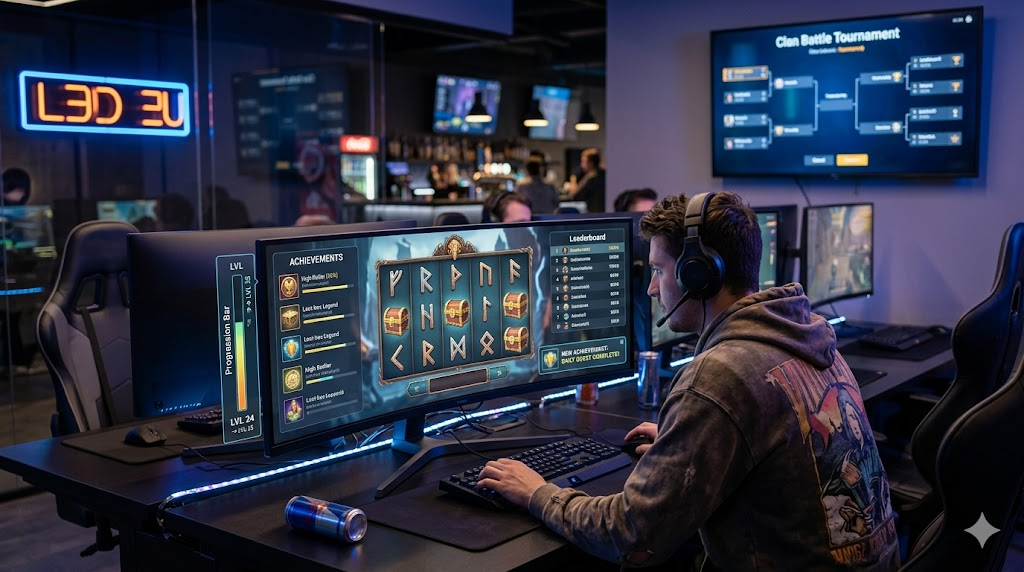
The days of staring at three spinning cherries on a static background are officially over. If you walk into a digital lobby today, you are more likely to find a sprawling fantasy map, a character creator, or a multiplayer leaderboard than a simple lever. The gambling industry realized something crucial recently: the new generation of players grew up on PlayStation and Steam, not on smoky backrooms. To keep them engaged, developers are ripping pages straight from the video game playbook. It is a world where “winning” and “leveling up” have become nearly synonymous, transforming the entire betting experience into something that looks, feels, and plays like a high-budget RPG.
The Loot Box Legacy and the Blur of Genres
The most obvious bridge between these two worlds is the infamous loot box. Originally a way for developers to monetize shooters and sports sims, these randomized digital crates are functionally identical to a slot machine spin. You pay a small fee, watch a flashy animation, and hope for a rare “skin” or power-up. It was only a matter of time before the reverse happened. Modern platforms now offer “mystery chests” or daily login rewards that mimic the dopamine loops of games like Overwatch or Counter-Strike.
This crossover is particularly visible in European markets. For instance, players looking for a more interactive experience often seek out an Online Casino Germany, where the integration of skill-based elements and narrative progression is becoming the standard. The goal isn’t just to bet; it’s to participate in a digital ecosystem. This shift has forced operators to reconsider how they present their content, moving away from isolated games toward unified player journeys.
To understand how deep this integration goes, we have to look at the specific psychological triggers being used to keep people clicking. These aren’t just cosmetic changes. They are fundamental shifts in how a user interacts with the software.
- Metagame Progression: Instead of just winning cash, you earn experience points (XP) that unlock new tiers or “worlds.”
- Daily Quests: Much like World of Warcraft, players are given specific tasks, such as “Spin 20 times on a Viking-themed slot,” to earn bonus currency.
- Avatar Customization: Using winnings to buy digital hats or outfits for a profile character creates a sense of ownership that a simple bank balance cannot match.
Achievements and the Social Climb

Humans are naturally competitive, a fact that video game developers have exploited for decades through trophies and achievements. Casinos have finally caught on. It isn’t enough to hit a jackpot anymore. Now, you want the “High Roller” badge or the “Weekend Warrior” trophy displayed on your public profile. This creates a social layer where players aren’t just competing against the house; they are competing against each other for status.
Leaderboards have become the heartbeat of modern platforms. Seeing your username at the top of a weekly tournament ranking provides a rush that a solitary win often lacks. It turns a solo activity into a spectator sport. This social engineering is bolstered by specific mechanics designed to foster a community feel:
- Global Chat Streams: Watching others hit big wins in real-time creates a “near-miss” effect for everyone watching, keeping the energy high.
- Clan Systems: Some innovative platforms allow players to form teams, pooling their “achievements” to unlock group rewards or enter exclusive tournaments.
- Mission-Based Unlocks: Certain games remain locked behind a “level gate,” requiring the player to complete easier tasks before they can access the high-stakes content.
Skill Based Interaction and the Death of Passive Play
The most significant change is the move toward skill-based mechanics. The modern player hates the idea of being purely at the mercy of an algorithm. They want to feel like their timing or strategy matters. This has led to the rise of “Crash” games and hybrid slots where bonus rounds resemble mini-games from the 16-bit era. If you can shoot down enemy planes or navigate a maze, you get a higher multiplier. It feels like gaming because, for all intents and purposes, it is.
This transition hasn’t been without its flops. Some studios tried to make “First Person Shooter” gambling games that were too clunky to enjoy, proving that you can’t just slap a betting engine on a bad game and call it progress. However, the ones who get it right create a loop that is incredibly hard to break. They have successfully moved the needle from “passive observer” to “active protagonist,” and that is a change that is likely here to stay.